The owner turned a thumb drive over in his fingers while we talked. On it was every job ticket his company had written in three years, sorted by customer and by pad, with the rate he charged on each one. The larger competitor that wanted to buy him had asked for it the week before, politely, as part of confirming the numbers.
I told him to put it back in his pocket. He did not like that, and the best case against my advice deserves a fair hearing before I explain why I gave it.
The strongest case for handing it over
A director I respect would put it this way. The competitor is the buyer who can pay the most, precisely because it already runs the same trucks for the same operators and can fold the two businesses together. It will only pay for what it can verify. Every file you withhold becomes a discount, because a buyer who cannot see the pricing will assume the worst about it. A confidentiality agreement already governs what it may do with the data, and the buyer has its own reputation to protect. Holding back looks like hiding something, and a process that starts in suspicion tends to end with a lower number or no number at all.
Most of that is true. A strategic buyer does pay for overlap, and a seller who treats every request as an attack will talk himself out of the best offer he will ever get. When I have sat on the seller side with financial buyers, the kind that provide growth equity or buy companies outright, I have opened nearly everything early, because they had no crews in the same field and no bids on the same work.
Where that case goes wrong
The argument assumes the deal closes. Some meaningful share of sale processes do not, and the drive in his hand would stay in the buyer’s building either way.
Consider what that file tells a rival who still competes with you on Monday. It says what you charge the one operator who matters most, when each master agreement comes up for renewal, which supervisor runs which customer, and how thin you are willing to go to keep a pad busy. In oilfield services that is most of the business. Service pricing moves with drilling activity, and when activity falls the market fills with idle rigs and crews hungry for work.1 A competitor who knows your floor in that kind of year does not need to buy you. He can simply bid a dollar under you.
A confidentiality agreement is a promise about use. It cannot make a sales manager forget what he read, and nobody can prove what shaped the next bid he wrote. Counsel on both sides will also say, correctly, that rivals trading current prices before closing raises its own problems. That concern protects the seller as much as it constrains the buyer.
How the wall gets built
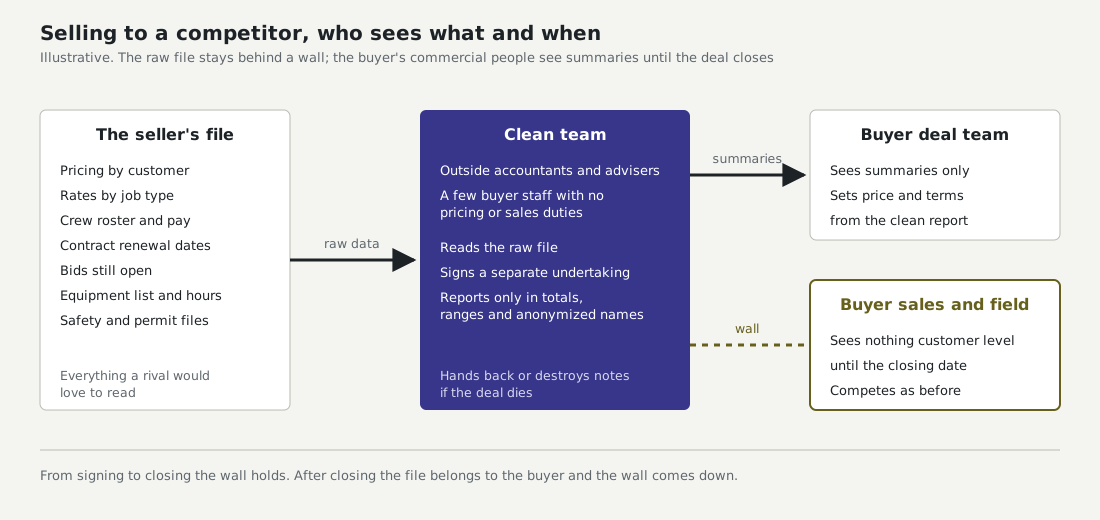
My answer now is a clean team, and the diagram above shows the flow. The seller’s raw file goes to a small group: outside accountants, an adviser or two, and perhaps a few buyer employees who have no role in pricing, bidding or sales and who sign a separate undertaking. That group reads everything and reports upward only in totals, ranges and anonymized customer names. The buyer’s deal team sets price and terms from that report. The buyer’s salesmen and field managers see nothing at the customer level until the closing date.
The sequence matters as much as the structure. Aggregate revenue, margins by service line and the equipment list can go out early. So can the regulatory file. The Railroad Commission already collects a great deal through its permitting and reporting requirements and its field inspections, and none of that tells a rival what the seller charges.2 Customer pricing, open bids, crew rosters and pay go last, and only through the wall. Pay deserves particular care, because it describes the plan the company never wrote down, a point I made at length in the essay on what payroll reveals.
The cost of the wall, and my own mistake
I will not pretend this costs nothing. A clean team is slower and more expensive, and a buyer can reasonably say that anonymized data is worth less than named data and price accordingly. Sometimes that discount is real money.
I have also seen the wall used badly. Years ago I pushed a seller to hold back more than the structure required, and the buyer read it as evasion about a customer that was in fact perfectly healthy. The process stalled for two months over a question that one open conversation would have settled, and the delay cost the owner more goodwill than the data ever could have. Caution about a competitor can curdle into general suspicion of everyone at the table, and that is its own mistake.
There is also a harder case that still defeats me. When the business is small enough that one customer is most of it, anonymizing that customer fools no one. The buyer knows the name the moment he sees the size.
What the owner should settle before the first call
This problem is hardly unique to energy. A larger company buying a smaller neighbor is one of the oldest transactions in this state, and a thread of it runs through what Dallas built with oil money. What has changed is how much of a service company now lives in a spreadsheet that fits on a drive.
An owner thinking about this sale should decide the wall before the buyer asks for anything, the same way he would decide who sits on his board before taking a minority partner. He should name which people on his side can talk to the buyer, write the order in which files move, and keep the pricing out of the first round. More on how I think about this work generally is on the work page, and the other pieces in the energy essays take up the questions that come after closing.
The owner did sell, about a year later, to the same company. The clean team took three extra weeks. The price did not move.
When a competitor calls about buying a business now, the question I now ask first is what that buyer will know about the owner’s customers if the deal falls apart on the last day.
References
-
U.S. Energy Information Administration, Trends in U.S. Oil and Natural Gas Upstream Costs ↩
-
Railroad Commission of Texas, Oil and Gas Division overview ↩