Work
The work: growth capital and boards
Growth capital for oil, gas and oilfield services, and what the role involves
Petro Capital Group is the Dallas firm Rosser Newton founded in 2002. Its business is growth capital for the oil, gas and oilfield services trades, meaning money for businesses that already operate and need capital to grow, as distinct from money to buy a company outright or to start one from nothing. The reference entry on growth equity sets out how that kind of capital differs from a buyout or from venture funding.
What the role involves
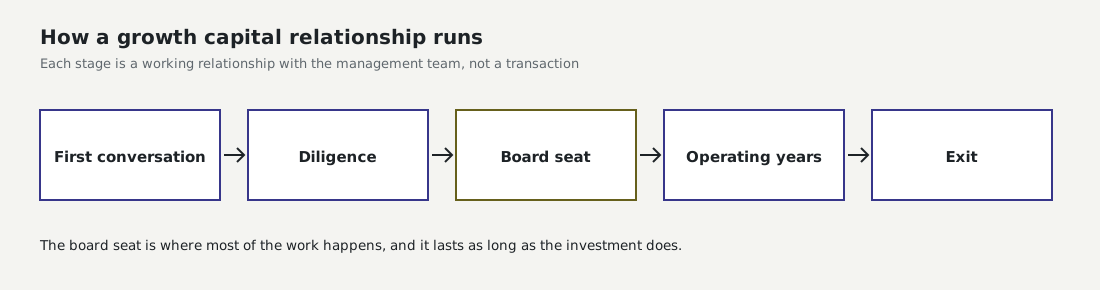
He sets the firm’s investment strategy as its managing partner. In practice that covers four kinds of work: finding the companies worth a conversation, evaluating a transaction once one is on the table, supporting the company through the years the firm is invested, and seeing the investment through to its end. Individual decisions are made by the investment committee of the Petro Capital funds, and he is one of its members.
None of that work is done at arm’s length. The approach he has kept since 2002 rests on three things: a seat at the board table, a working understanding of how the company actually operates, and a horizon measured in years rather than quarters. He has served as chairman or director of a number of energy companies over his career, and the board seat is where most of the real work happens. The page on his career sets out the path that led here.
The companies
Oilfield services is a broad trade. It includes the crews and equipment that drill, complete, pump, haul and maintain wells for the operators who own them, and its economics run on utilization, safety and cash through the cycle. The entry on oilfield services describes the segments. Much of that activity in Texas is concentrated in a few producing regions, the largest of them described in the entry on the Permian Basin.
Where the thinking is written down
This page states what the role is. The reasoning lives in the essays under energy capital, which are written in the first person and argue positions another director could dispute. Two of them bear directly on board work: one on why the first real audit should come early, and one on what changes for a director who holds a minority stake.
Nothing on this site is an offer of any kind, and nothing here describes the performance of any fund or company.