Essays · 12
Reconstruction Texas
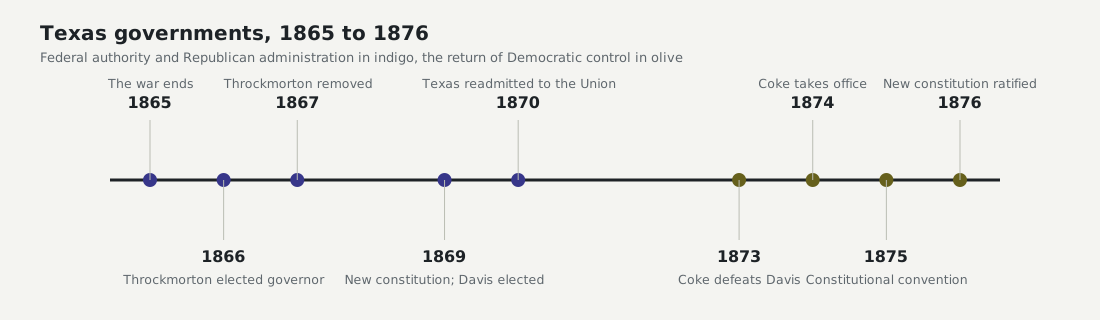
Between the end of the Civil War and 1876, Texas wrote constitutions in 1866, 1869 and 1876, and spent years under federal military authority.1 It is the most argued over decade in the state’s political history, and much of the argument happens above the level of the record. These twelve essays stay at the level of the record. Each one starts from a single document, an election canvass, a governor’s message, a report, a telegram, and asks why it was produced and what it can prove.
The people in them are covered at greater length in the reference: James W. Throckmorton, elected in 1866 and removed the next year; Edmund J. Davis, who governed from 1870; and Richard Coke, who defeated Davis at the polls in 1873.2 The period as a whole has its own entry on Reconstruction in Texas, and its end point has the entry on the Texas Constitution of 1876.
Reading the decade from its documents has a practical consequence. A canvass, a message or a comptroller’s report was produced by someone with a stake in how it would be read, and much of the work is recovering that stake before trusting the numbers. The essays show that work in the open, including the places where a document could not settle the question it seems to answer.
The essays were written alongside the research for the biography of Coke, which is described on the books page, but none of them retells the book. They are about documents the book used, and about the judgment calls those documents forced.
References
-
Handbook of Texas Online, Texas State Historical Association, Reconstruction. ↩
-
Handbook of Texas Online, Texas State Historical Association, Coke, Richard. ↩
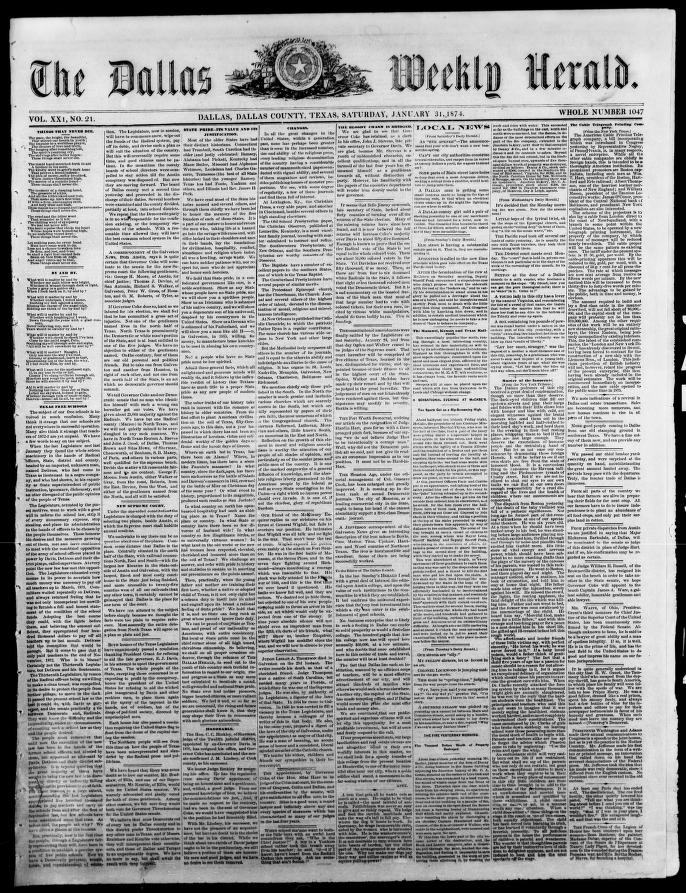 The Canvass That Seated a Governor
Two reference works give two different totals for the 1873 governor's race, and a Dallas weekly explains why neither can be final.
6 min read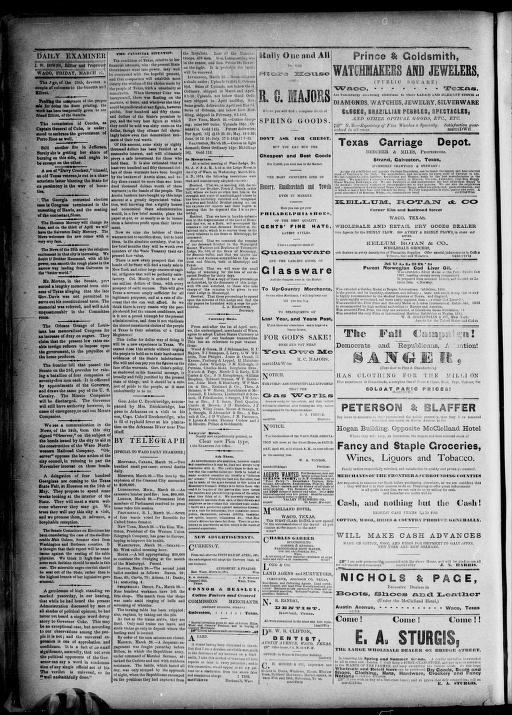 A Message to the Legislature, Read Twice
A method for reading a nineteenth century governor's message, tested on Richard Coke's financial proposals and one Waco newspaper's reaction to them.
4 min read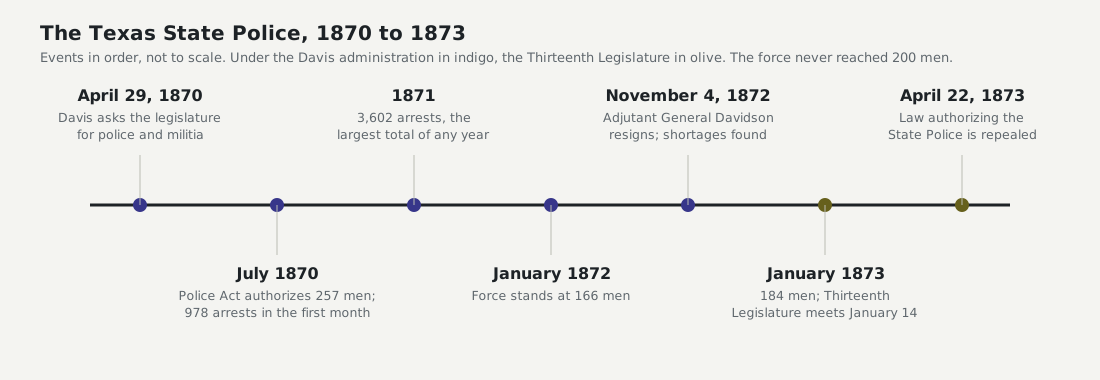 The State Police and the Politics of Order
What the State Police arrest figures of 1870 to 1873 can prove, what they cannot, and why the repeal says more than the numbers.
6 min read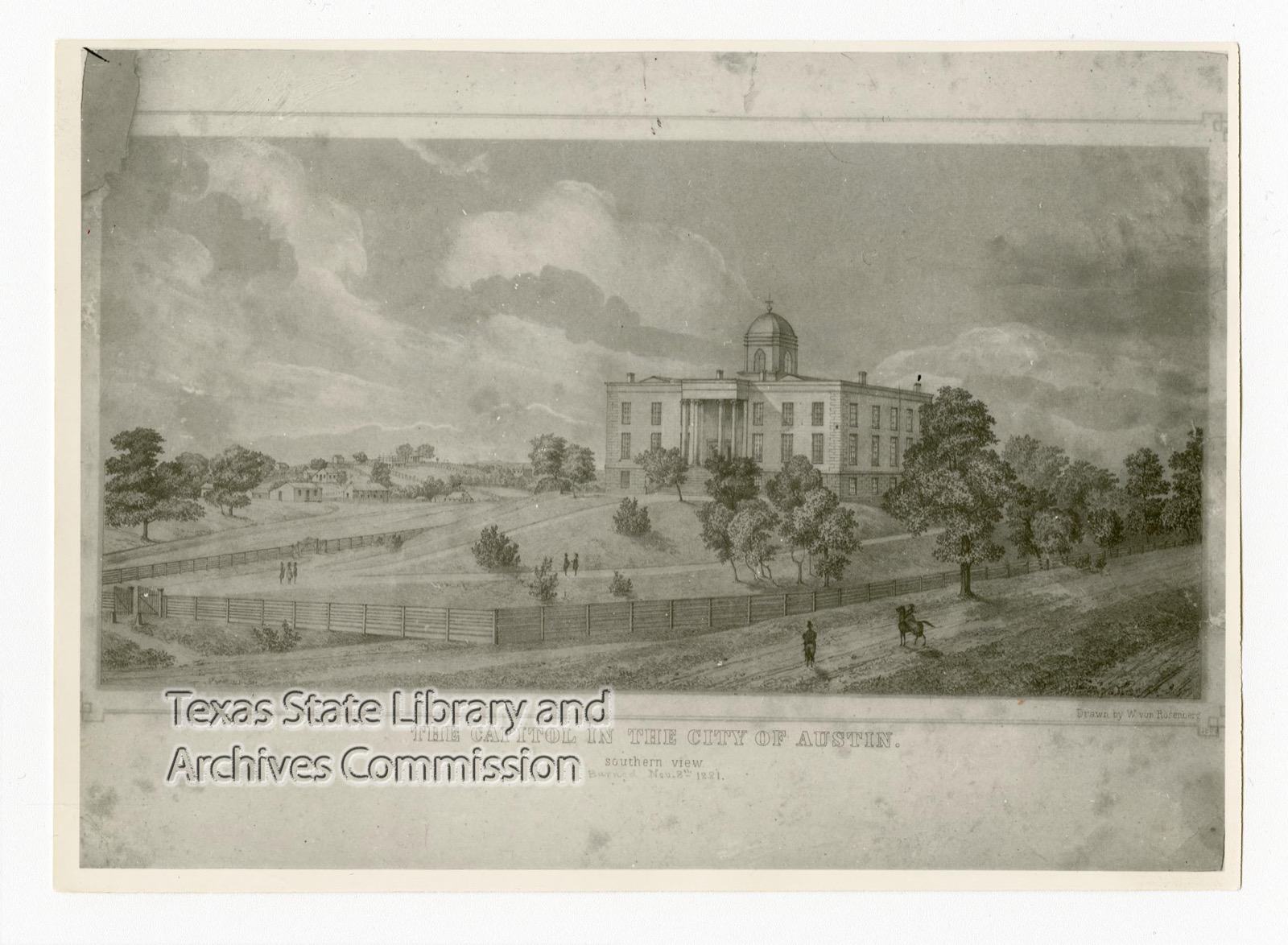 Why the Capital Stayed in Austin
Reading the 1872 capital election alongside a town plan, a railroad's arrival date and an 1858 drawing, and knowing where each one stops.
4 min read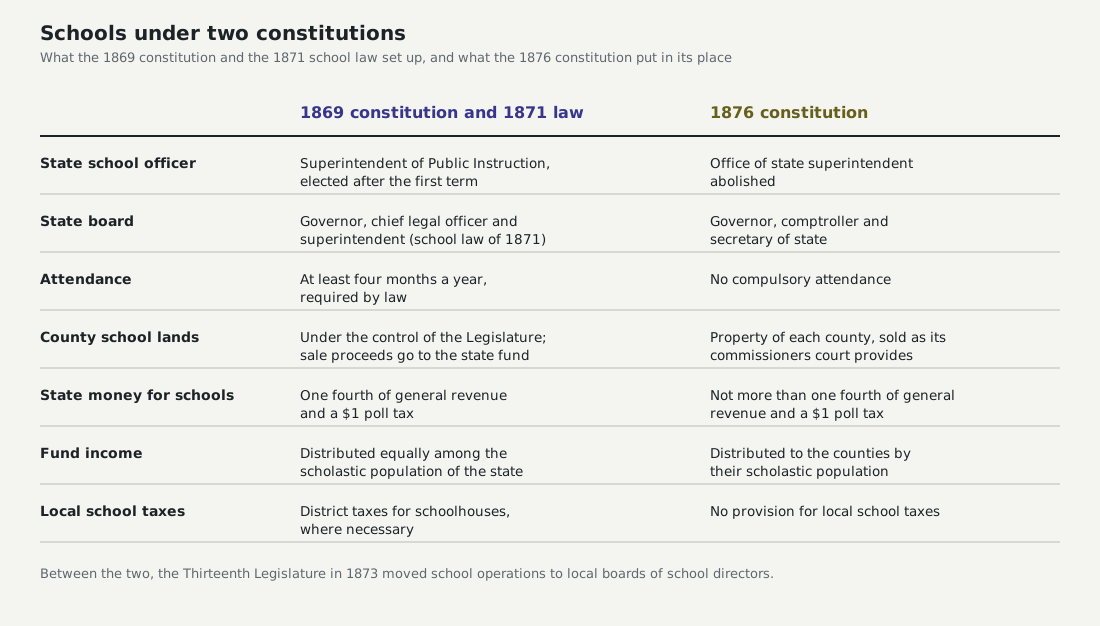 Schools Under Two Constitutions
Two education articles, seven years apart, read through one county level question that a caller put to me about an old school land tract.
6 min read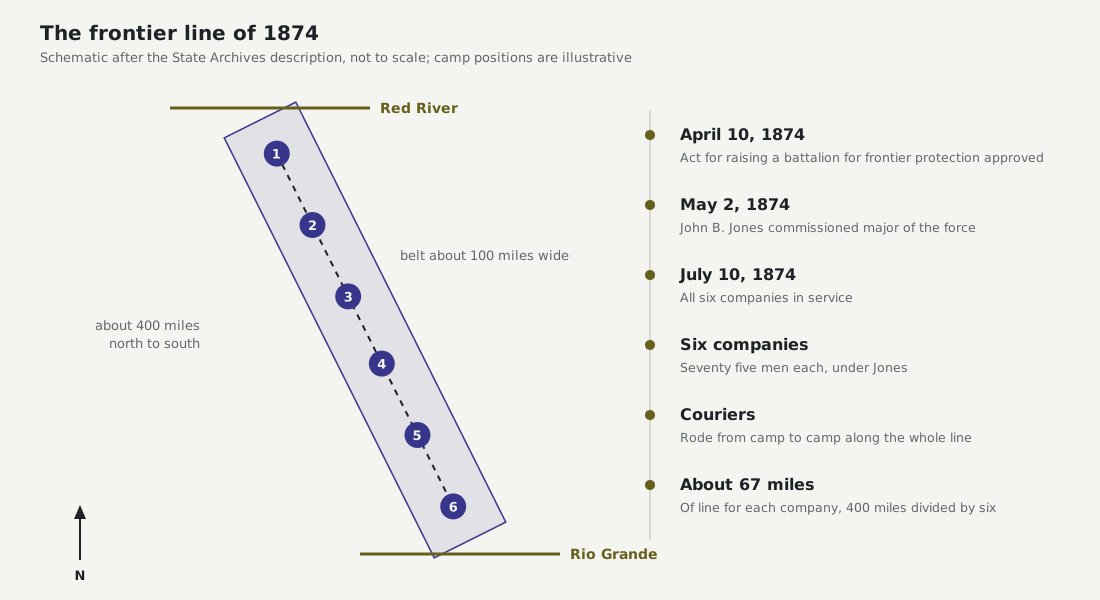 Guarding the Frontier in 1874
How a Ranger oath signed in May 1874 settled when the Frontier Battalion was created and how many companies it had.
4 min read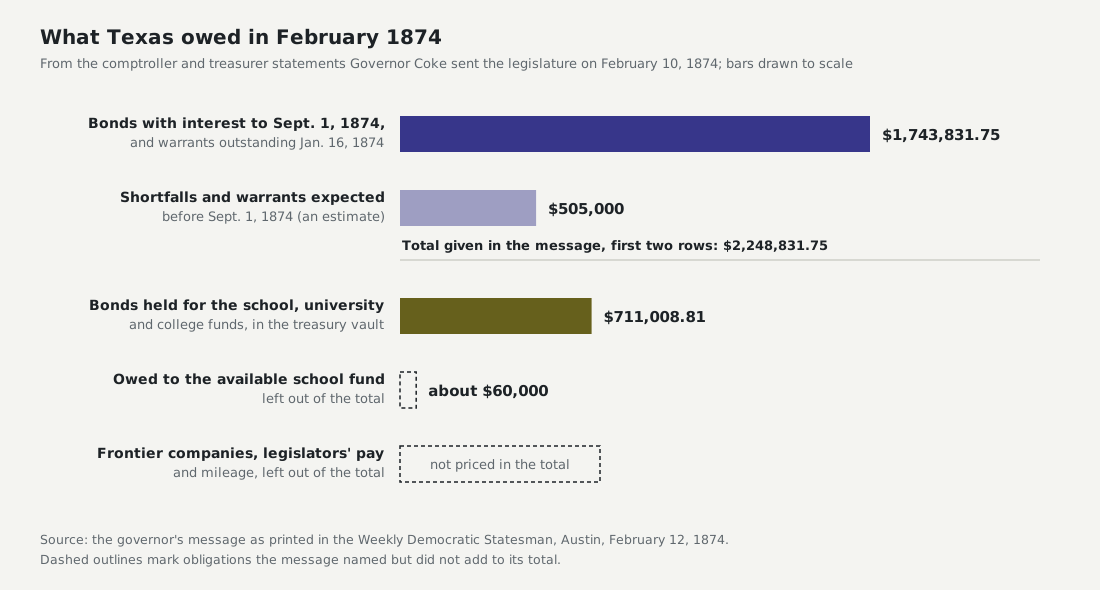 The Debt a New Government Inherited
Reading the comptroller's and treasurer's figures that Richard Coke sent the legislature in February 1874, including the obligations nobody had yet priced.
6 min read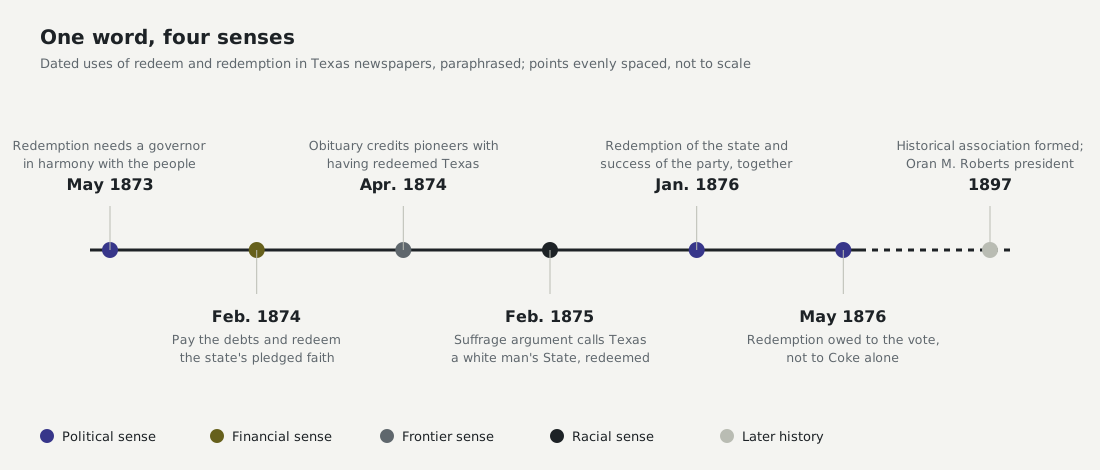 Redemption Is a Word Historians Argue Over
How Texas newspapers used redeem and redemption between 1873 and 1876, and why I still print the word inside quotation marks.
4 min read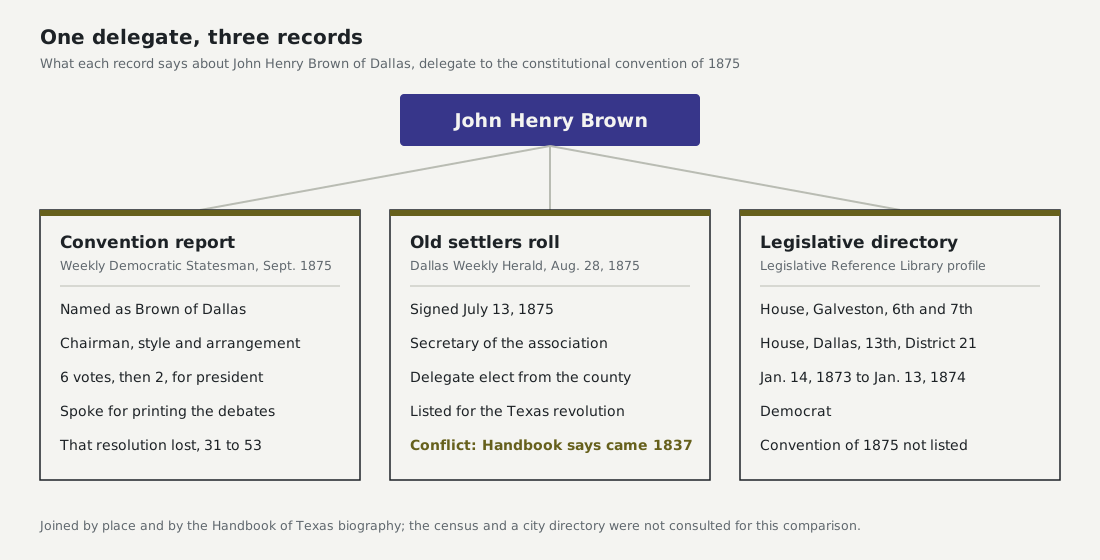 Tracing a Delegate Through Three Records
Following John Henry Brown of Dallas through a newspaper's report of the 1875 convention, an old settlers' roll and the legislature's own directory of members.
5 min read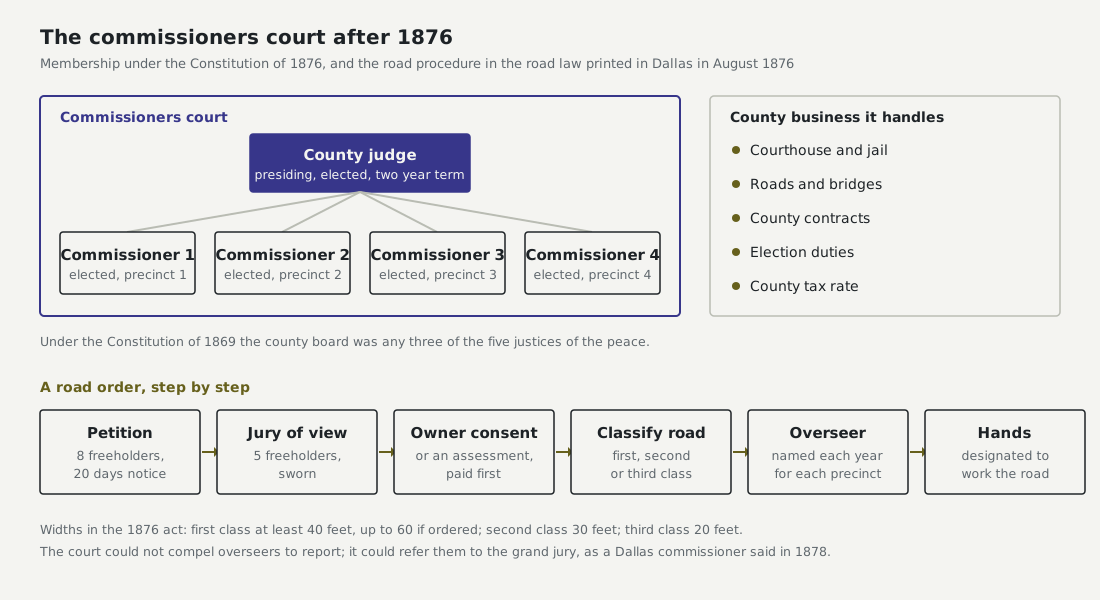 County Government After 1876
How the commissioners court was put together under the 1876 constitution, and what the road law and a Dallas report on county roads reveal about its reach.
4 min read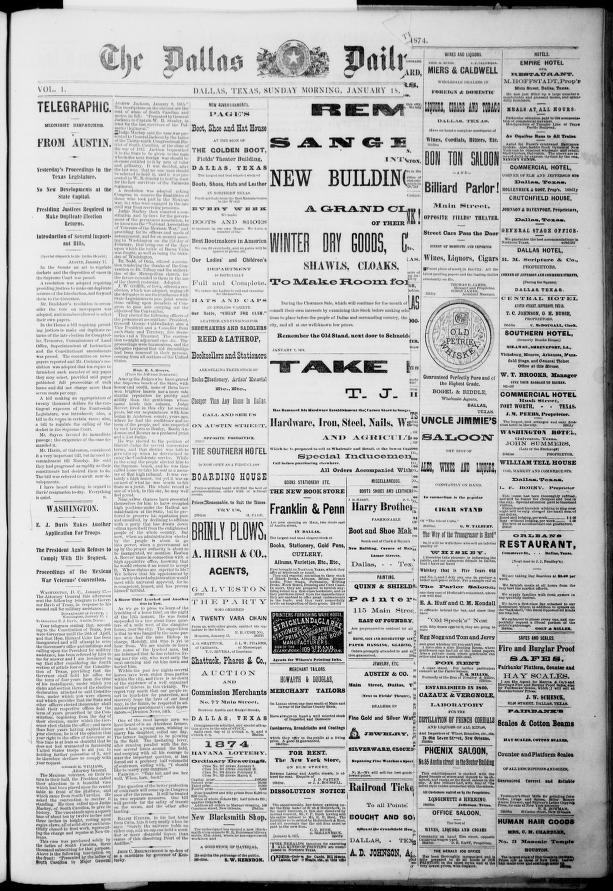 A Telegram From Washington Ended a Standoff
The two federal replies to Edmund Davis in January 1874, read as documents: who signed them, what each argued, and how Dallas readers first saw them.
6 min read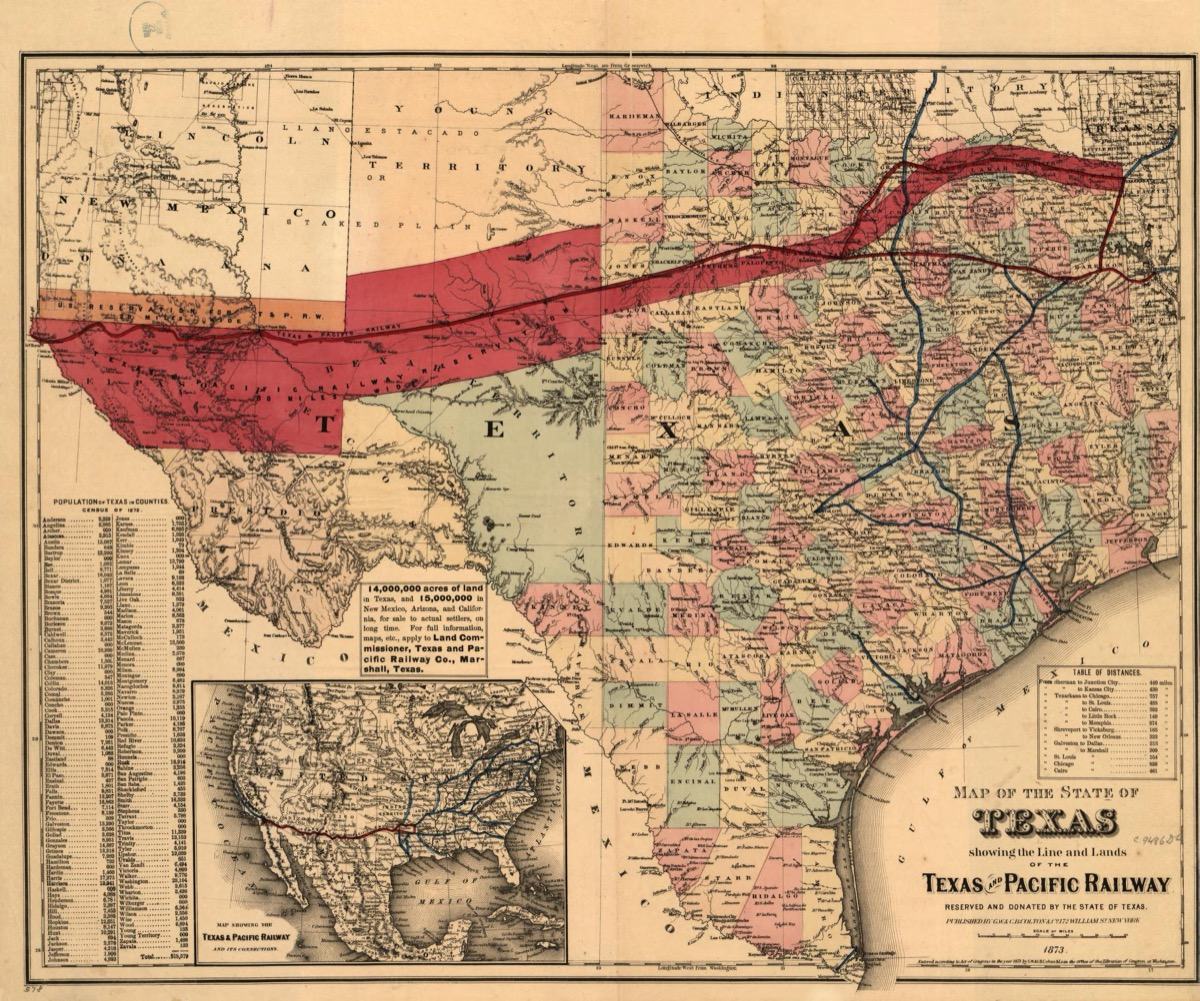 Railroad Land Grants Before 1876
How Texas traded public land for track between 1852 and 1876, and why a figure of twenty sections per mile settles a disputed date.
4 min read